Application · Wet Areas
The spa-bathroom look is really the absence of grout. One sealed mineral surface from the shower floor to the ceiling — engineered for water, built over the tile you already have.
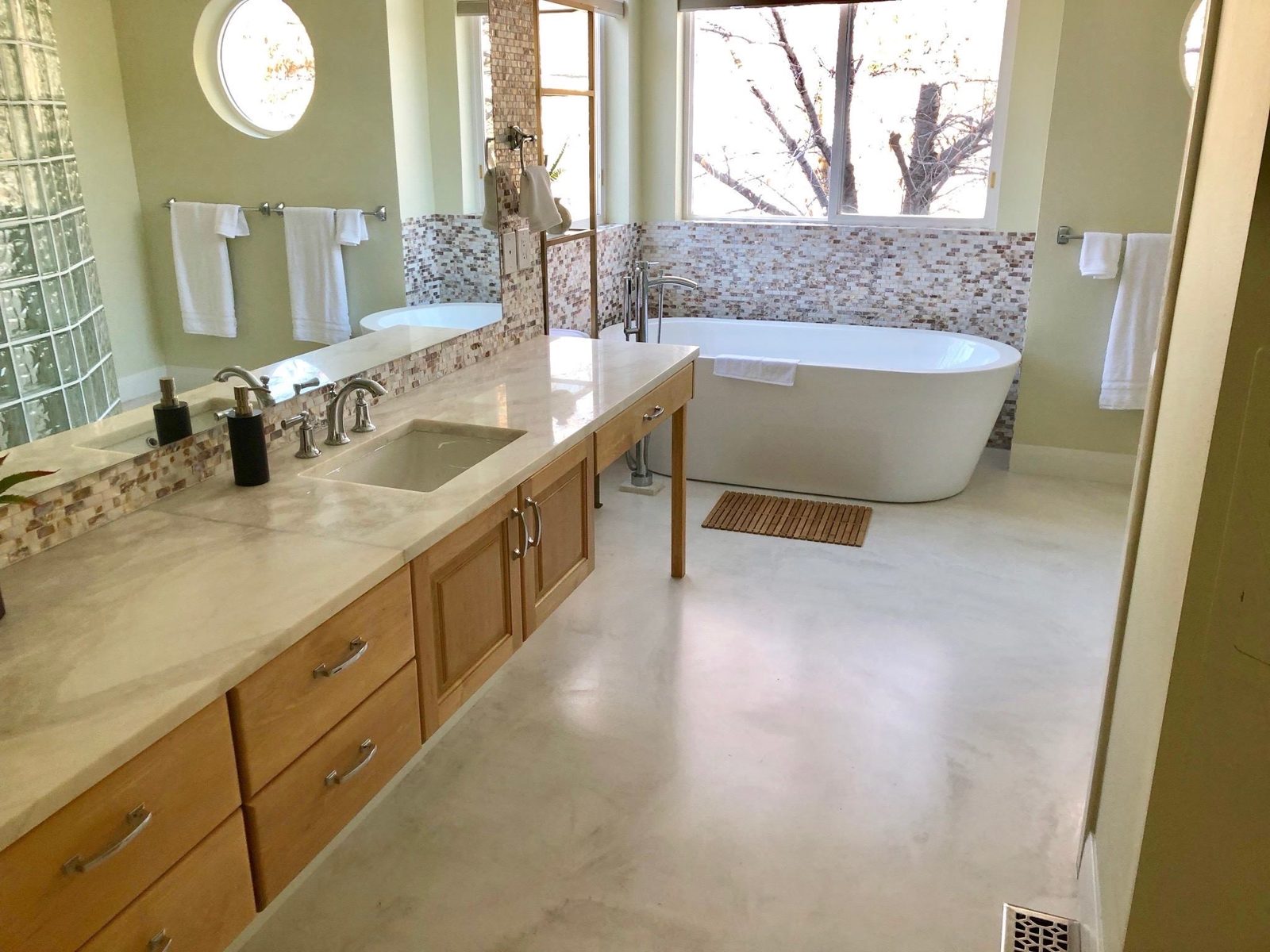
A shower is the hardest room in the house for any finish, which is why our wet areas get their own system: a grip primer matched to the substrate, reinforced microcement coats, and a sealer rated for standing water. It is not the living-room build with a different topcoat — and knowing that difference is what separates an installer from someone who bought a kit online.
The same system carries across bathroom floors, vanity tops, and walls, so the whole room reads as one composition. See walls & countertops for how the finish extends past the wet zone, or the portfolio for completed Nashville bathrooms.
The wet-area system is. Shower installations use a dedicated build — primer, reinforced microcement coats, and a sealer engineered for standing water — that differs from what goes on a living-room floor. This distinction is exactly why installer experience matters.
In most cases, yes. Sound tile stays put; the grout lines are filled and the wet-area system is built over it. The shower you're tired of looking at disappears without a demolition day.
Texture is adjustable. Shower floors get a finer tooth than walls, and the finish is sampled so you feel it before you approve it.
None. From the shower floor up the walls and across the ceiling if you want — one continuous surface. No grout to scrub, mildew-prone joints eliminated.
A typical full shower runs about four days including cure time before first use. We give you the exact schedule, in writing, before work begins.
Tell us about the room — or the whole house — and what you want it to feel like. You'll hear back the same business day.
Schedule a design consultation