Application · Floors
One continuous floor from room to room — no grout, no transitions, no demolition. Installed over the slab, tile, or subfloor your home already has.
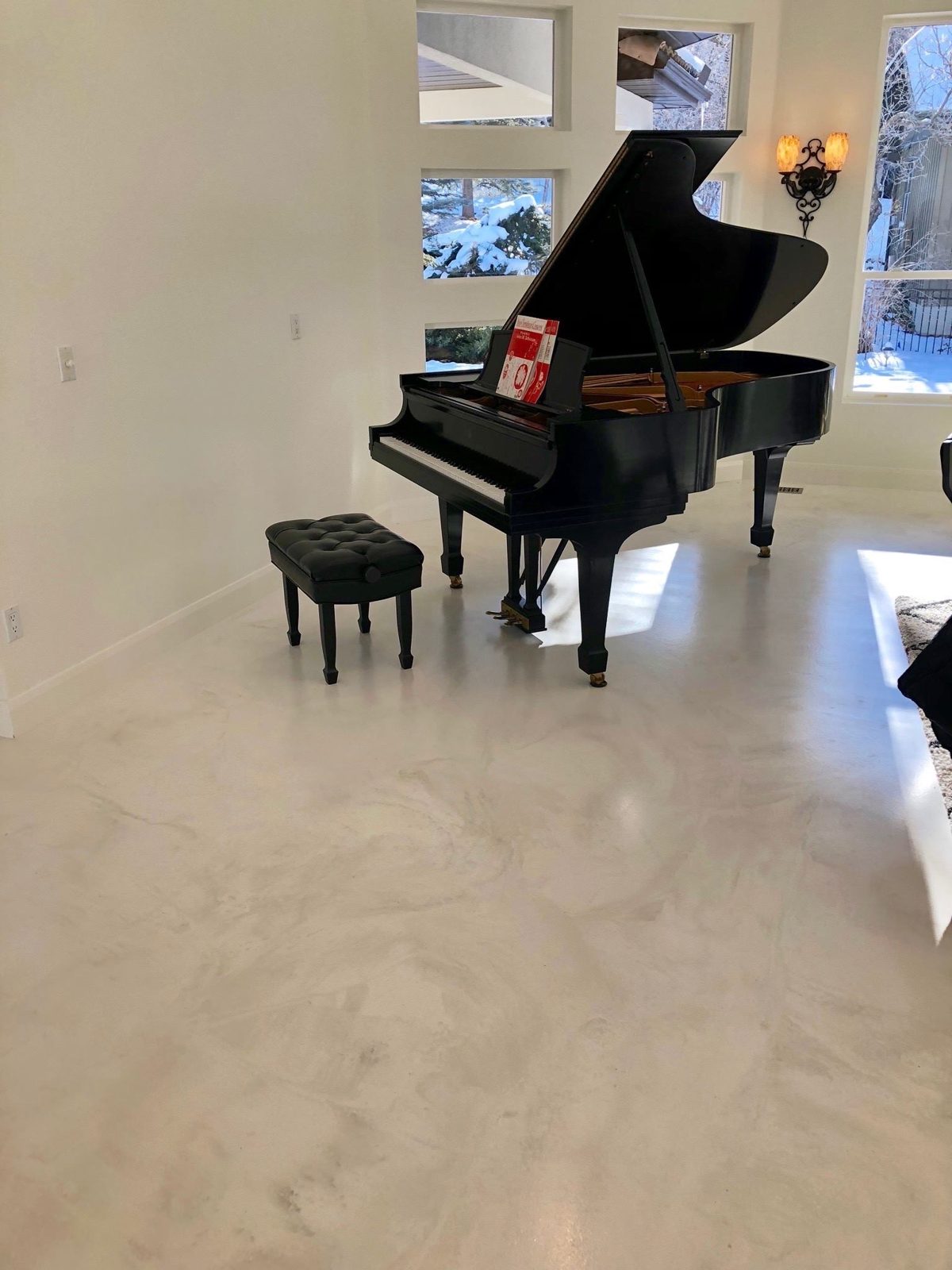
Flooring transitions are where open floor plans quietly fall apart — a threshold strip here, a grout line there. A microcement floor removes all of it. Kitchen, living, hall, and primary suite become a single mineral surface, tinted to your palette and sealed for how you actually live.
The build adds almost no height, so existing doors clear, appliances slide back in, and stairs don't need rework. Most single rooms are finished in three to four days; whole homes are phased so you're never displaced from your own house.
Velluto gives a floor hand-troweled depth and movement — the choice for the rooms you see up close. Aria lays a uniform, sprayed field across big open areas on a tighter schedule. Many projects combine them: Aria across the main field, Velluto in the bath. You'll hold a physical sample of each before anything goes on the calendar, so the choice is settled by what you see and feel — not by a brochure.
Yes — sound, well-bonded tile is a common substrate. The grout joints are filled and the microcement is built directly over the tile, so the demolition, dust, and disposal never happen.
The complete build is roughly the thickness of two credit cards. Doors, thresholds, and cabinet toe-kicks almost always stay exactly where they are.
Yes. Microcement performs well over hydronic radiant systems — the thin build conducts heat efficiently. We verify the system and cure schedule during consultation.
Microcement is flexible compared to slab concrete, and the mesh-reinforced build is engineered to resist substrate movement. Honest answer: any cement product can hairline over a moving crack, which is why substrate assessment comes before any quote.
Dust mop and damp mop with a pH-neutral cleaner. No grout lines means nowhere for grime to collect — it's one of the easiest floors to live with.
Tell us about the room — or the whole house — and what you want it to feel like. You'll hear back the same business day.
Schedule a design consultation